Applications

Aerospace

A growing challenge for the aerospace industry is to design and build aircrafts that are reliable, environmentally friendly and at the same time maintain the highest safety standards. Lightweight materials, such as new alloys and composites, are now in high demand in order to be safe under extreme conditions. High strength and rigidity are key parameters, but rigorous fire resistance is also very important.

Thanks to the use of lightweight aircraft construction also reduces fuel consumption. In order to meet all these requirements, carbon fiber reinforced composites can be used. We supply ready-made graphite and CFC components for the aerospace industry.

Automotive

Graphite and composite materials are important components in the automotive industry – this is a trend which is now highly significant in this sector. We offer special solutions made of graphite and CFC which increase efficiency and reduce CO₂ emissions – a key assumption for economic and sustainable car transport.

We provide innovative solutions based on graphite and lightweight composites.

Continuous Casting

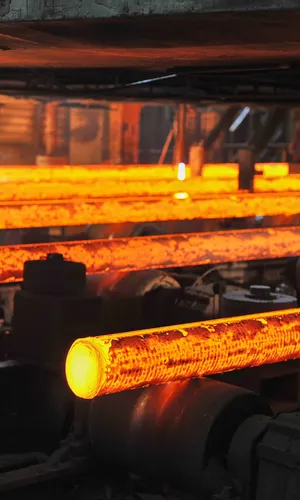
The casting process consists in a continuous outflow of molten metal through the hole under the influence of gravity. In contact with the cooled surface, the metal solidifies and releases it in the form of rods with a round or square cross-section or in the form of pipes.
One of the applications of graphite are strip casting dies used for metal continuous casting. This technique is used in the processing of non-ferrous metals such as copper and aluminium.
The choice of the right grade of graphite depends on the composition of the alloy, which is being casted.
Brass (Cu-Zn) requires the use of properly porous graphite, so that the zinc can evaporate in the area of the solidification front. Grey iron requires wear-resistant graphite, while alloys containing elements such as nickel or cobalt must reduce the chemical impact of the graphite form. The factors that determine the choice of the grade of graphite are:

  • Casting speed
  • Size and shape of the casting part
  • Quantity of alloy
  • Casting orientation (vertical or horizontal)

Not only the graphite grade itself is responsible for a satisfactory casting result, but it also depends on the design of the casting die, the quality of machining and the specific characteristics of the casting installation.

For horizontal and vertical casting process we offer isostatic, moulded, vibration-moulded and extruded graphites. We can supply you with products such as cooling plates, strip casting dies, crucibles, casting moulds or semi-finished products (round/square materials)

We will be glad to help you with choosing the right graphite grade, so that it corresponds to the casting conditions and the type of casted metal.

Alloy Shape CGM-185 CGI-185 CGI-187 CGI-189 CGI-775 CGI-785
Grey and ductile iron wire
billet
strip
tube
Brass (Cu-Zn) wire
billet
strip
tube
Bronze (Cu-Sn) wire
billet
strip
tube
Phosphorus bronze wire
billet
strip
tube
Maillechort (CuNiZn) Nickel-silver wire
billet
strip
tube
Nickel-copper wire
billet
strip
tube
Red copper, Phosphorus deoxidized copper wire
billet
strip
tube
Precious metal alloys wire
billet
strip
tube

NOTE

Further improvements in the service-life and speed of casting can be reached through a pyrolytic carbon coating and/or purified grades.

Chemical Industry

Carbon and graphite materials are resistant to chemical agents – no other traditional material has such a wide range of properties and applications. The most important feature of carbon and graphite in this application is their resistance to almost all chemical compounds in a wide temperature range, except for strong oxidizing substances.

Our solutions can help chemical manufacturers solve material problems in the most corrosive environments.

Glass and Quartzglass Industry

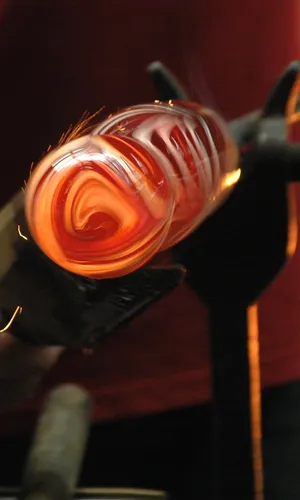
In the production of technical glass, laboratory glass, pharmaceutical glass, tube glass, container glass or hollow glass, the materials have to comply with many parameters such as purity, precision, physiological safety, dimensional accuracy, energy and cost efficiency. In order to ensure a constant quality of the glass product, all materials that come into contact with hot glass must withstand high challenges and work reliably. Graphite is a material with a wide range of applications and meets all requirements for the glass industry. The most complex shapes of special glass can be obtained by blowing glass using special graphite moulds. Pure graphite forms are also the only material suitable for the formation of high purity quartz vessels.

We manufacture graphite and CFC products, which are distinguished by low thermal conductivity, very high density and resistance to oxidation. The highest quality of our materials will result in the efficiency of your work and improve the quality of manufactured glass products. The high density of graphite makes it highly resistant to abrasion – thanks to that, no dust or any other impurities are formed, even under high loads or high temperatures. All these parameters make your work more efficient, because our graphite provides long service life.

To meet the challenges of manufacturing and refractory processes, specialty graphite solutions are needed. The materials we offer have been appreciated by our customers for their outstanding technical properties. The purity of the material, precision, surface quality and cost-effectiveness are becoming major challenges, therefore specialty graphites are becoming increasingly important. We can supply you with the following graphite products:

  • plates
  • rounds
  • handles
  • fixtures
  • rollers
  • mandrels
  • moulds
  • clamps
  • heating elements
  • crucibles

We have extensive experience in designing and processing graphite parts used in the quartz glass industry in which high purity graphite is of great importance. We can offer purified graphite parts with an ash content of <5ppm.

Heat Treatment

High temperature processes are often required for advanced industrial processes. Often components have to work in chemically aggressive environments; it is important that the materials used have long-term stability at very high temperatures. Both the properties of graphite and carbon, such as resistance to thermal shocks, high mechanical strength and resistance to aggressive agents, meet the requirements of the heat treatment industry.

We offer a wide range of solutions and materials for the high temperature sector, including heating elements, graphite felts, rigid thermal insulation boards, furnace linings, crucibles, sintering moulds, trays and more.

The graphite products we supply to the high-temperature industry have helped our customers achieve higher productivity, lower process costs and longer furnace life.

Mechanical Industry

Carbon and graphite in mechanical applications offers a key advantage over other materials. Chemical inertness, self-lubricating properties, high strength-to-weight ratio and thermal stability make our graphite products ideal components. In addition, these properties can be improved by coating the surface with aluminium oxide (Al2O3), zirconium oxide (ZrO2), chemical or metal impregnation.

We supply graphite parts for mechanical seals, carbon seal segments, sliding bearings, rotors and vanes, pistons, rings, washers and many more.

We offer a wide range of solutions and materials for the high temperature sector, including heating elements, graphite felts, rigid thermal insulation boards, furnace linings, crucibles, sintering moulds, trays and more.

The graphite products we supply to the high-temperature industry have helped our customers achieve higher productivity, lower process costs and longer furnace life.

Metallurgy

Graphite products are used in the metallurgical industry due to their high thermal and chemical resistance and good lubricating properties. We manufacture graphite parts for the metallurgical industry based on technical documentation, in accordance with all requirements for material and machining.

We can offer molds and casting dies, hot pressing dies, boats, rods, pipes, spacers, casting rings, hot-pressing parts, resistance heaters, heating rods, holders etc.

Non-ferrous Metals

We offer a wide range of carbon and graphite products for non-ferrous applications, supplying high performance graphite components with minimal wear even under extreme operating conditions.

In our offer you can find the following components, such as various types of crucibles for non-ferrous metal casting, moulds, boats, crucible plugs, lances, rotors, flux tubes,stirrers etc.

Photovoltaic

Graphite components are used in the photovoltaic industry to meet the different needs in the various production steps.

We are committed to providing you with high quality graphite products that have outstanding performance characteristics. We are aware that graphite is needed in applications at very high temperatures and in extremely corrosive environments, therefore our materials can be purified to <5 – <50 ppm.

For this purpose, we offer heaters, crucibles, heat shields of fine graphite or carbon fiber reinforced carbon, electrodes, sleeves, screws, susceptors, as well as insulation elements made of graphite felts.

PVD and CVD Coating

Thanks to the high mechanical strength and chemical resistance of our graphites, they are particularly well suited for PVD (physical vapour deposition) and CVD (chemical vapour deposition) processes.

Various graphite parts are used in the application of thin layers of titanium carbide and titanium nitride. For these applications we supply graphite targets, cones, plates, groove plates, foils and felts.

Redox-flow Battery

A redox-flow battery is an electrochemical system that stores energy and is rechargeable. It consists of two electrolytes – positive (catalytic) and negative (anolytic) – which are stored in two separate containers. In order to convert energy, the electrolytes pass through an electrochemical cell consisting of two semiconductor cells separated by a membrane. Each half cell contains a graphite felt electrode, on which a partial redox reaction takes place.

A redox-flow battery technology is similar to both a fuel cell and a battery where liquid energy sources are used to generate electricity and can be charged in the same system. Flow batteries are ideal for applications such as the integration of renewable energy sources, as industrial back-up power or temporary storage to stabilize the grid. One of the biggest advantages of the floating batteries is that they can be recharged almost immediately by changing the electrolyte fluid and at the same time recovering the used material for recharging.

We offer graphite felt electrodes for redox-flow batteries as we can supply specialized graphite products that meet the highest standards of efficiency and quality. Our graphite materials are distinguished by their electrical conductivity, purity and corrosion resistance – leading to a significant increase in performance as well as reliability in energy storage.

Thanks to our knowledge, many years of experience and close cooperation with our customers, we are able to constantly improve our products, providing our customers with the highest quality products.
Semiconductor

Components made of special graphite are required in many semiconductor manufacturing processes. Crystal manufacturing processes are carried out at very high temperatures and in an extremely corrosive environment, which is why the key parameters are so highly desired by customers: the highest purity and outstanding precision.

We supply graphite products of high purity and highest quality, such as crucibles, heaters, wafers, rods, insulations or graphite elements for furnaces.

In order to meet the needs of our customers, we also offer a silicon carbide coating and a pyrocarbon coating. We work closely with our customers to provide customized solutions.

A redox-flow battery technology is similar to both a fuel cell and a battery where liquid energy sources are used to generate electricity and can be charged in the same system. Flow batteries are ideal for applications such as the integration of renewable energy sources, as industrial back-up power or temporary storage to stabilize the grid. One of the biggest advantages of the floating batteries is that they can be recharged almost immediately by changing the electrolyte fluid and at the same time recovering the used material for recharging.

We offer graphite felt electrodes for redox-flow batteries as we can supply specialized graphite products that meet the highest standards of efficiency and quality. Our graphite materials are distinguished by their electrical conductivity, purity and corrosion resistance – leading to a significant increase in performance as well as reliability in energy storage.

Thanks to our knowledge, many years of experience and close cooperation with our customers, we are able to constantly improve our products, providing our customers with the highest quality products.

Sintering Process

We supply graphite and CFC products for the sintering process. Our graphite materials are distinguished by high thermal shock resistance, high compressive and flexural strength.

For the sintering process we produce e.g. graphite plates, crucibles, CFC plates, rill plates, rack systems or spacers.

Depending on your application, our engineers will choose the right grade from different types of graphite or CFC.

Spark Erosion EDM

Electrical Discharge Machining

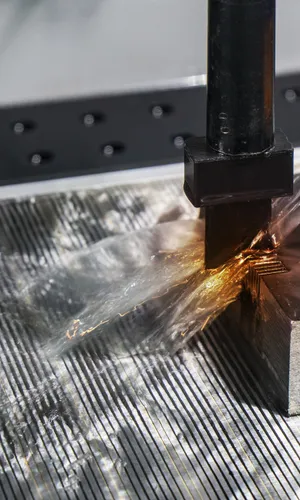
The process of electrical discharge machining involves the controlled removal of material from the surface of the workpiece, which occurs through the influence of electrical energy. An electric spark is generated between the workpiece and a charged electrode. To control the current flow, a dielectric fluid is used as the medium. The CNC machine brings the two electrodes close enough to ionize the gap and superheat the surface of the workpiece and the electrode. When the required temperature is reached, the material is discharged and vaporized.

The method is mainly used for machining specialised machine parts and equipment of materials that are difficult to machine. EDM machining allows obtaining complicated shapes which are difficult or impossible to achieve with traditional cutting methods. The EDM machining is carried out with a precision copper or graphite electrode.

We can supply to you:

  • graphite plates for EDM,
  • graphite rounds for EDM,
  • graphite blocks,
  • finished parts according to the technical drawing.